PARTICIPANTS
Countries
Croatia, Cyprus, France, Greece, Ireland, Italy, Malta, Portugal, Spain.
Third countries
Senegal and Seychelles.
SCOPE
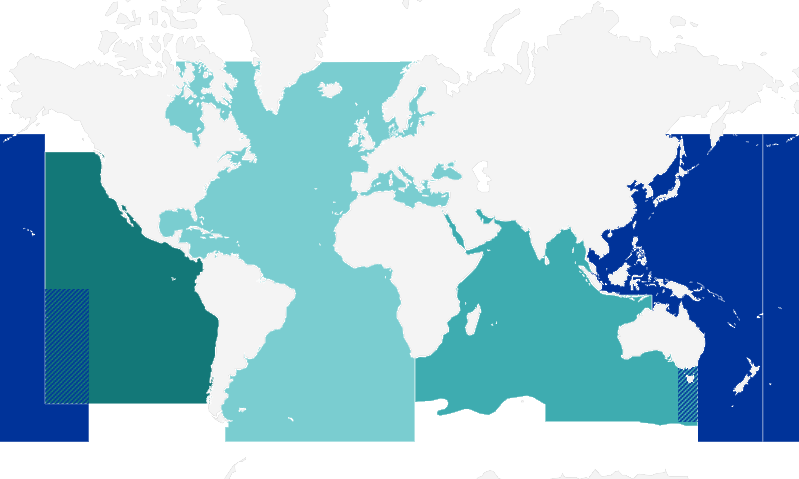
Large Pelagics (LP)
The Regional Coordination Group for the Large Pelagics (RCG LP) fisheries targeting highly migratory species in areas managed by the main Regional Fisheries Management Organisations (RFMOs) relevant to EU fleets:
- WCPFC (Western & Central Pacific).
- IATTC (Eastern Pacific)
- ICCAT (Atlantic)
- IOTC (Indian Ocean)
TERMS OF REFERENCE
- TOR 1. RCG LP structure, organisation and links
- TOR 2. Available data, data transmissions and gaps
- TOR 3. Regional database
- TOR 4. Sampling and regional working plans
RESOURCES
DCF: European Commission – Fisheries Data Collection Framework
The Data Collection Framework (DCF) is the EU system that guides Member States in collecting and reporting fisheries, fish processing and aquaculture data in a harmonised manner.
ICES: International Council for the Exploration of the Sea -SharePoint
The International Council for the Exploration of the Sea (ICES) is an intergovernmental marine science organization, meeting societal needs for impartial evidence on the state and sustainable use of our seas and oceans. The work following the principle of providing best possible independent scientific advice for policy.
RCGs Métier list
The GitHub repository containing the standard métier codes and related scripts is a reference tool used by the RCGs to classify fishing activities, including fishing gear, target species and fleet characteristics.
Level of Ambition
Interactive infographic is an output of Fishn’Co project in close collaboration with ISSGs and RCGs experts. The infographic is the result of the compilation, identification and analysis of the status of regional coordination and it is aimed to inform the design of the RWP structures.
INTERSESSIONAL SUBGROUPS (ISSGs)
ISSG TT
Background
The ISSG TT is the result of the merge of two subgroups, namely Tropical Tuna Treatment and Tropical Tuna Observer. These subgroups have officially operated as separate groups until 2025. However, they have consistently held back-to-back meetings at the same location and time. Considering the growing collaboration between the subgroups, the significant overlap in participants and the need for clear chairmanship they decided to merge during their meeting in Tenerife, 2025.
General description
The group’s primary objectives include coordinating data collection and monitoring of the tropical purse seine fleet operating in the Atlantic and Indian Oceans, as well as preparing the EU’s data submissions to ICCAT and IOTC. This data collection encompasses both onboard and port-based sampling.
In terms of onboard monitoring, the group manages both traditional human observer programs and the increasingly adopted Electronic Monitoring (EM) programs.
For onshore scientific sampling, the group coordinates activities at key ports in third countries where the EU fleet operates. This coordination goes beyond the EU’s Data Collection Framework (DCF), with active participation from countries such as Seychelles and Senegal.
The ISSG TT is led by two cochairs. Each cochair will represent a different topic (port and onboard sampling) and come from a different country (Spain and France). The chairing term will last two years, after which the vice-chair will rotate into the chair role. The hosting of the annual meeting will continue rotating among AZTI-IRD-IEO.
Chairs: Jon Ruiz Gondra (ESP), Antoine Duparc (FRA)
Vice-chairs: Philippe Sabarros (FRA); Pedro Pascual Alayón (ESP)
RCGs involved: LP
ISSG Baitboat/pole and line
Background
The ISSG Baitboat/pole and line was established to address the specific data collection and coordination needs for pole-and-line and baitboat fleets operating across different regions. Given the highly selective nature of this fishing method and its strong socio-economic importance to specific coastal communities (such as those in the EU outermost regions), standardizing biological and transversal data collection protocols for these specific fleets is critical for accurate regional stock assessment.
General description
The primary objective of this subgroup is to harmonize sampling methodologies for catches, discards, and biological parameters of target species-predominantly tunas such as albacore, skipjack, and yellowfin. Key activities include evaluating observer coverage, standardizing data formats to respond to specific RFMO data calls, and sharing best practices across participating Member States. By coordinating these efforts, the group ensures consistent, high-quality data delivery under the EU Data Collection Framework (DCF) tailored specifically to the operational realities of baitboat and pole-and-line vessels.
Chairs:
RCGs involved: LP
ISSG BFT (Bluefin tuna)
Background
The management of Eastern Atlantic and Mediterranean Bluefin Tuna (Thunnus thynnus) involves highly stringent conservation measures, recovery plans, and complex monitoring requirements mandated by ICCAT. The ISSG BFT was formed to centralize and coordinate these distinct, rigorous data collection obligations-ranging from caging/farming activities to commercial and recreational fisheries-across all Member States involved in the RCG LP.
General description
This subgroup is dedicated exclusively to standardizing biological sampling, catch reporting, and observer coverage for Bluefin Tuna. Its scope covers specialized monitoring techniques, such as the use of stereoscopic cameras for estimating fish size in cages, and aligning sampling schemes with the electronic Bluefin Catch Document (eBCD) system. The group works intersessionally to ensure that Member States implement harmonized sampling strategies that provide robust data to support ICCAT’s stock assessments and the European Commission’s monitoring of quotas.
Chairs: Hugo Maxwell (IRL)
RCGs involved: LP
ISSG Regional DDBB CS
Background
The ISSG was established in 2021 following a recommendation from the RCG LP to address the complex task of developing a regional database for LP data. Since its inception, the group has included representatives from the nine LP countries involved in the RCG LP, key end users (ICCAT, IOTC, and FDI), experts from other regional database structures (RDBES and RDBFIS), and members of DG MARE, providing additional support.
General description
The ISSG proposed a test study on the RDBES data format with LP data in 2024. Five MS out of the nine RCG LP MS agreed to participate in the case study, namely: France, Portugal, Ireland, Italy and Cyprus.
Chairs: Ioannis Thasitis (CYP)
RCGs involved: LP
ISSG RWP (Regional Work Plan)
Background
The Intersessional Subgroup on the Regional Work Plan (ISSG RWP) was established under the Regional Coordination Group for Large Pelagics (RCG LP) to oversee the development, drafting, and implementation of the Regional Work Plan. Under the EU Data Collection Framework (DCF), a Regional Work Plan supplements Member States' National Work Plans (NWPs) by establishing shared agreements, standardized methodologies, and harmonized sampling strategies. Because the RCG LP covers a worldwide geographical scope-encompassing areas managed by major Regional Fisheries Management Organisations (ICCAT, IOTC, WCPFC, and IATTC), this dedicated subgroup is essential to consolidate the highly diverse inputs from the other specialized ISSGs into a single, cohesive legal and operational framework.
General description
The primary objective of the ISSG RWP is to develop, review, and maintain the multi-annual Regional Work Plans for the RCG LP. Operating intersessionally, the group ensures that the technical specifications, species lists, and sampling procedures proposed by the other thematic subgroups are properly integrated into the standardized textboxes and tables required by the European Commission.
Key tasks of the ISSG RWP include:
- Drafting and Structuring the RWP: Formulating the official RWP documents to ensure they meet the technical requirements of the DCF and smoothly integrate into the National Work Plans of the participating Member States.
- Harmonizing Data Collection: Acting as a central node to align methodologies across countries, ensuring consistency in how biological and transversal data for highly migratory species are collected and reported.
- Monitoring the "Levels of Ambition": Evaluating and updating the targeted levels of regional coordination, ensuring that shared data collection goals are progressive, measurable, and practically feasible for Member States.
- End-User Alignment: Ensuring the commitments outlined in the RWP accurately reflect the scientific and management data requirements of key end-users, including the RFMOs, STECF, and the European Commission.
Chairs: Ioannis Thasitis (CYP)
RCGs involved: LP
ISSG Longlines outside Med
Background
The EU surface longline fleet operates extensively across the Atlantic, Indian, and Pacific Oceans, targeting a diverse mix of swordfish, tunas, and pelagic sharks. Because these distant-water fisheries operate across vast geographical areas under the jurisdiction of multiple RFMOs (ICCAT, IOTC, WCPFC, and IATTC), the ISSG Longlines outside the Mediterranean was established to address their unique logistical and regulatory data collection challenges.
General description
The focus of this subgroup is the coordination of at-sea monitoring programs (both human scientific observers and Electronic Monitoring systems) and the harmonization of port sampling for target species and sensitive bycatch (including sea turtles, seabirds, and non-target elasmobranchs). The group works to align data collection protocols with the diverse and overlapping requirements of different ocean basins, ensuring the EU meets its international scientific reporting obligations efficiently while maintaining standardized methodologies across the involved Member States.
Chairs:
RCGs involved: LP
ISSG Med LP fisheries (Mediterranean Sea Large Pelagics)
Background
Large Pelagic fisheries in the Mediterranean Sea possess distinct ecological, fleet, and operational characteristics compared to those in the open oceans. Characterized by a complex mix of specialized industrial vessels and highly dispersed small-scale coastal fleets, these fisheries require tailored regional coordination to meet ICCAT requirements.
General description
This subgroup purpose is to coordinate data collection for key Mediterranean pelagic species, primarily Mediterranean swordfish and albacore. Its activities focus on standardizing methodologies for both at-sea observer coverage and onshore sampling, with special attention given to the logistical challenges posed by the high number of landing ports and the seasonal nature of the fisheries. The ISSG aims to identify data gaps, harmonize regional sampling plans, and ensure that Mediterranean Member States provide consistent, high-quality data to support localized stock assessments and management plans.
Chairs: George Tserpes (GRC)
RCGs involved: LP